
Most hair loss in men is hereditary: androgenetic alopecia, in which genetically sensitive follicles react to the hormone DHT and gradually shrink. It follows a recognisable pattern – receding temples and a thinning crown – that doctors grade on the Norwood scale from 1 to 7. Depending on the cause, your stage and your donor hair, treatment ranges from medication and PRP to a hair transplant. This guide to male hair loss causes and treatment explains what is happening, when to see a doctor first and what you can realistically expect.
The main cause: androgenetic alopecia
Male pattern baldness is by far the most common form of hair loss in men: an estimated half of all men show some degree of it by 50. The key player is dihydrotestosterone (DHT), made from testosterone by the enzyme 5-alpha reductase. In men with an inherited sensitivity, follicles along the hairline and crown respond to DHT by shrinking (miniaturisation): hairs grow for a shorter time, become finer, and eventually barely show.
- Genetics come from both sides of the family, not just your mother's father.
- Hair at the back and sides of the head is usually much less sensitive to DHT. That is why a horseshoe-shaped fringe almost always remains – and why this area serves as the donor zone for a transplant.
- Progression varies: some men stabilise around stage 3, others reach stage 6 within a decade.
Other male hair loss causes: when to see your GP first
Not all hair loss is genetic. Some causes are treatable or temporary, and then a transplant is the wrong answer.
- Stress and telogen effluvium: a major life event, serious illness, high fever, surgery or crash dieting can trigger diffuse shedding a few months later. It usually recovers once the trigger is gone.
- Deficiencies: low iron (ferritin), vitamin D, zinc or protein can disrupt hair growth.
- Thyroid disorders: both an underactive and an overactive thyroid can cause diffuse thinning.
- Medication: including some blood thinners, beta blockers, retinoids, certain antidepressants, anabolic steroids and chemotherapy. Never stop prescribed medication without talking to your doctor.
- Alopecia areata and scalp conditions: round bald patches, or an itchy, scaly or painful scalp, point to a different diagnosis.
Sudden heavy shedding, patchy bald spots, or hair loss combined with symptoms such as fatigue or weight change? See your GP (huisarts) first. They can arrange blood tests and refer you to a dermatologist if needed.
The Norwood scale: male hair loss in 7 stages
Doctors use the Norwood (Hamilton-Norwood) scale to classify male pattern baldness. Your age, how fast the loss progresses and your donor hair quality matter just as much as the stage.
| Stage | What it looks like | What is often considered |
|---|---|---|
| Norwood 1 | No or minimal hairline recession | No treatment needed |
| Norwood 2 | Slight, symmetrical recession at the temples (a "mature" hairline) | Monitoring; medication if loss clearly progresses |
| Norwood 3 | Deeper M- or V-shaped temples; in the 3-vertex variant also a thinning crown | Medication or PRP; hairline restoration if loss is stable |
| Norwood 4 | Further frontal recession and a clearly bald crown, still separated by a band of hair | Hair transplant, often combined with medication |
| Norwood 5 | The band between front and crown becomes narrow and thin | Hair transplant, sometimes over more than one session |
| Norwood 6 | Front and crown merge into one bald area; the horseshoe fringe remains | Transplant possible, prioritising the front |
| Norwood 7 | Only a narrow, often thinner fringe at the sides and back | Limited donor hair; realistic expectations are essential |
Male hair loss treatment: the options step by step
Sensible treatment follows a ladder: establish the cause, slow the progression, and only then restore bald areas if needed. The options are often combined.
1. Medication: minoxidil and finasteride
Minoxidil (a lotion or foam applied to the scalp) is available without a prescription at pharmacies and drugstores in the Netherlands. It can slow shedding and add some fullness; allow three to six months, and expect some extra shedding in the first weeks. Possible side effects include scalp irritation and unwanted hair growth elsewhere. Oral minoxidil is sometimes prescribed off-label, but only under medical supervision.
Finasteride 1 mg blocks the conversion of testosterone to DHT and is prescription-only in the Netherlands. In many men it slows or halts hair loss. Some users experience side effects such as reduced libido, erectile problems or mood changes; if you notice low mood, stop and contact your doctor straight away. Finasteride also lowers PSA levels, which matters for prostate screening.
Both work only as long as you use them. Always discuss them with your GP or dermatologist first.
2. PRP treatment
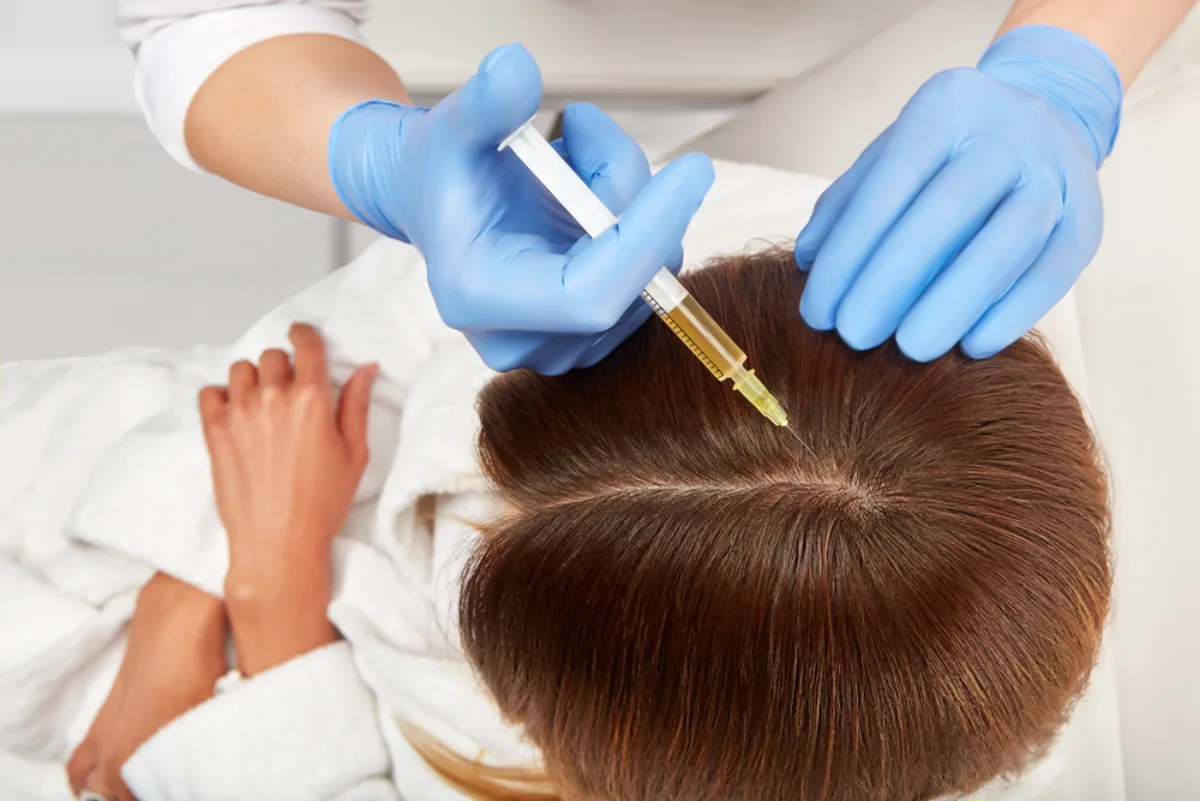
In PRP treatment, a small amount of your own blood is drawn and centrifuged, and the platelet-rich plasma – rich in growth factors – is injected into the scalp. Research shows encouraging but variable results: PRP can strengthen thinning hair and slow shedding, but it does not regrow hair on completely bald areas. A series of sessions is usually needed. Each session takes 45–60 minutes with no downtime, and at MyHaar PRP starts from €250 per session. One PRP session is also included at the end of every transplant.
3. Hair transplant
In a hair transplant, the surgeon moves follicles (grafts) from the DHT-resistant donor area to bald or thinning zones. Because grafts keep their original characteristics, they generally continue to grow permanently. At MyHaar, Turkish hair-restoration specialists perform the procedure in Den Haag – Turkish expertise, with treatment, aftercare and check-ups in the Netherlands. We use Sapphire FUE for larger areas (up to about 5,500 grafts per session), DHI with Choi implanter pens for precise hairline work (up to about 3,500 grafts per session), or a combination of both, under local anaesthesia as a day procedure.
Are you a good candidate for a hair transplant?
- The cause is androgenetic alopecia and other causes have been ruled out.
- Your hair loss is reasonably stable – in young men the final pattern is often hard to predict.
- You have enough good-quality donor hair at the back and sides.
- You are in good general health (which is why we do a pre-op blood test).
- You have realistic expectations about density and timing.
During the free consultation, the surgeon assesses your donor area and stage, designs a hairline with you that will still look natural as you age, and gives you a written quote, valid for 30 days with no hidden costs. Transplants start from €1,750 (Sapphire FUE) or €2,500 (DHI); see our pricing page for all rates. Note that Dutch basic health insurance normally does not cover a cosmetic hair transplant.
Realistic expectations
A transplant redistributes existing hair; it does not create new hair. Donor supply is finite, so at Norwood 6 or 7 the surgeon prioritises where grafts have the most impact – usually the front and hairline that frame your face. Results also take time: transplanted hairs shed temporarily in weeks 2–8 (shock loss, which is normal), regrowth starts in months 3–6, the most visible change comes in months 6–12, and the final result appears at 12–18 months.
Your own non-transplanted hair may continue to thin, so doctors often advise continuing medication or PRP afterwards. MyHaar provides an 18-month written growth guarantee and check-ups at 3, 6, 12 and 18 months.
When should you act?
Hair loss is not an emergency, but fully miniaturised follicles no longer respond to medication or PRP. Sudden, patchy or painful loss: see your GP first. Early recession or a thinning crown (Norwood 2–3): confirm the cause and consider medication or PRP. Stable, clearly bald areas (Norwood 3–6): a transplant consultation makes sense.
Frequently asked questions
Can male hair loss be stopped?
Hereditary hair loss cannot be cured, but it can often be slowed. Finasteride and minoxidil can stabilise it in many men for as long as they are used. A transplant restores bald areas but does not stop the process in your remaining hair.
How much daily hair shedding is normal?
Losing 50 to 100 hairs a day is normal. If you see clearly more, or your scalp becomes visible, have it checked.
Does PRP work for baldness?
PRP can strengthen thinning hair and slow shedding, but will not regrow hair on completely bald skin. It works best early or alongside a transplant; results vary.
What is the right age for a hair transplant?
There is no strict age limit, but in young men the final pattern is hard to predict, so many surgeons are cautious under 25.
Is a hair transplant covered by insurance in the Netherlands?
Usually not: a transplant for hereditary baldness is considered cosmetic and normally falls outside basic insurance.
Want to know your Norwood stage and which treatment suits you? Book a free consultation in Den Haag or by video. The surgeon will examine your hair and donor area, explain honestly what is achievable and give you a personal written quote – with no obligation.